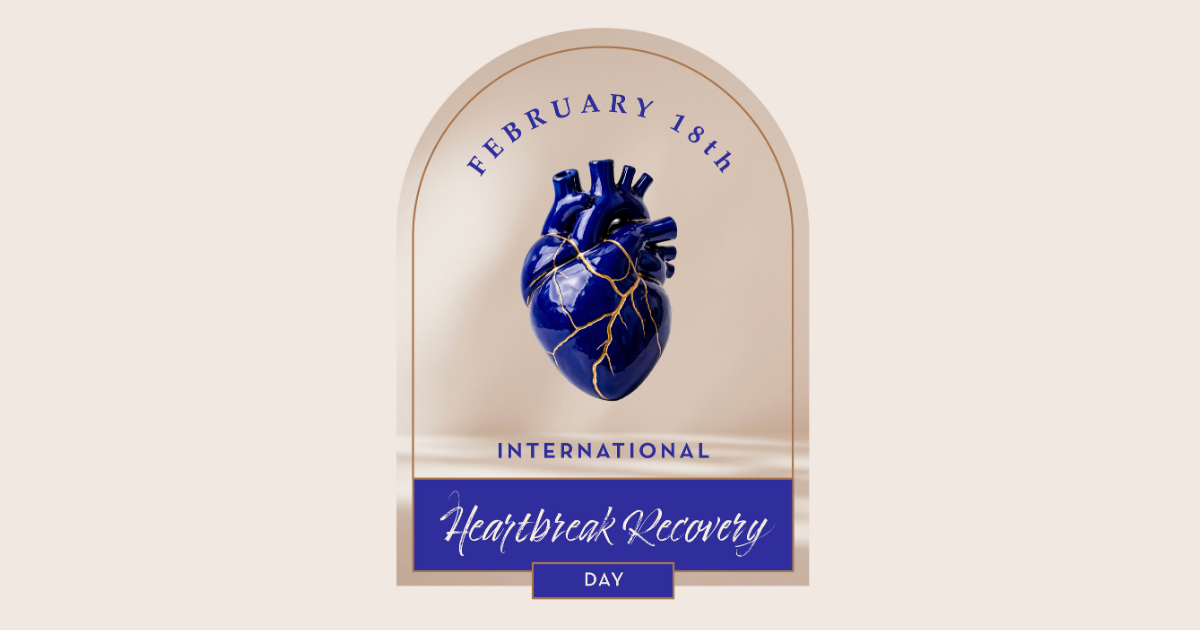
February 18th: International Heartbreak Recovery Day, A Day to Honour Endings
Heartbreak is universal. But so is healing.
Originally published: Feb 1, 2025
Updated: Feb 16, 2026
Romantic heartbreak is a universal—profound, personal, and often life-altering. Yet, it's often overlooked in our culture, overshadowed by the celebration of love and romance, especially on Valentine’s Day.
We celebrate proposals, weddings, anniversaries, and romantic milestones. But when love ends, the experience often becomes private and isolating. There is no cultural container for the grief that follows a breakup, a divorce, betrayal, or the slow realization that something isn’t working.
After more than a decade of working with heartbroken clients, I’ve seen how destabilizing that gap can be. Especially in February, which has become known as the love month. Valentine’s Day naturally amplifies romantic expectations, which means it also amplifies romantic loss.
That’s why I created International Heartbreak Recovery Day (HRD) on February 18th, not as a protest against Valentine’s Day, but as a counterbalance. A space to acknowledge the emotional aftermath that so many people navigate quietly, often alone.
Why February 18th?
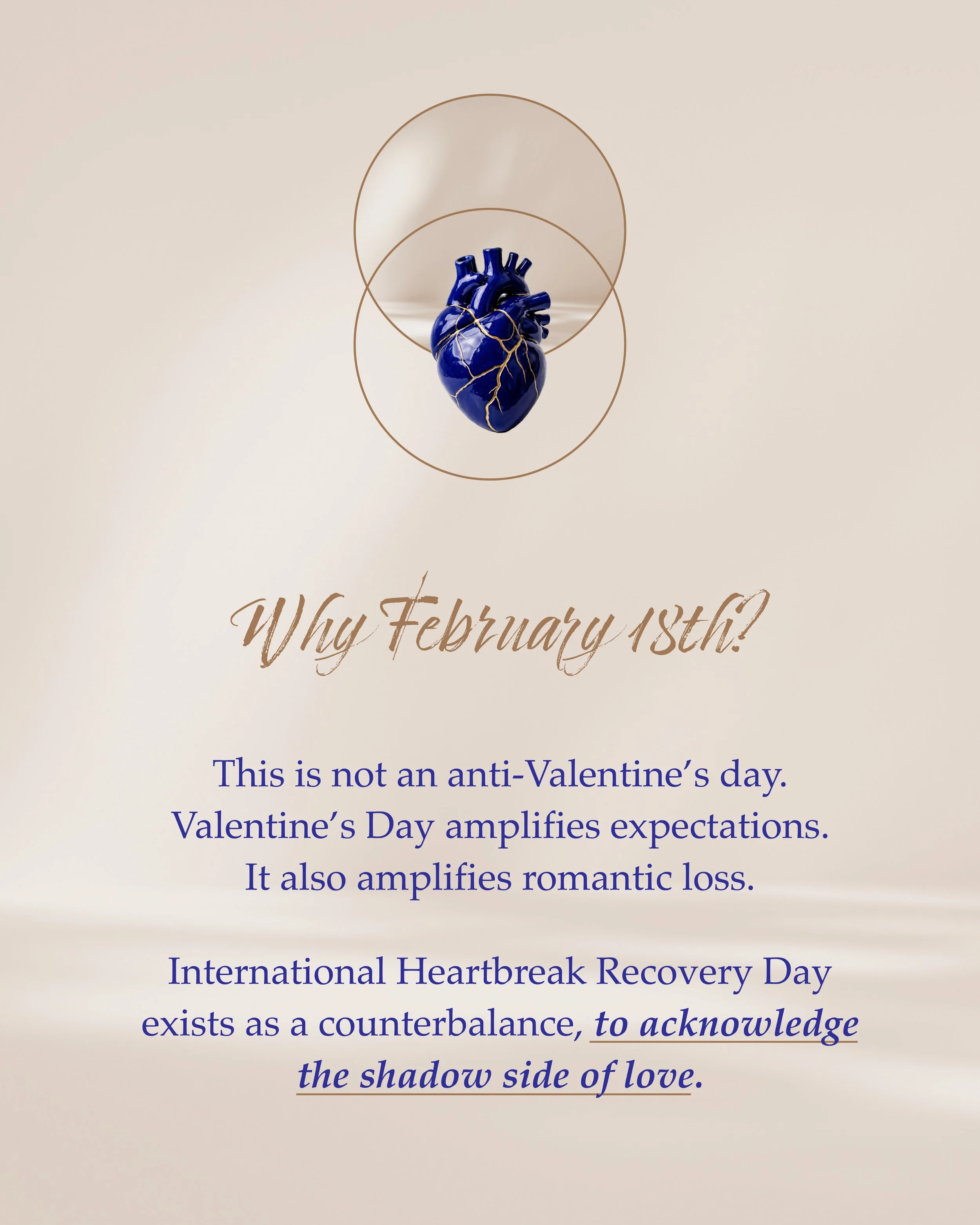
February 18th, just days after Valentine’s Day, is symbolic. While Valentine’s Day focuses on celebrating romantic love and affection between partners, International Heartbreak Recovery Day shifts the spotlight and provides a meaningful alternative for those facing the pain of ended relationships.
For many, Valentine’s Day can be isolating. Its focus on romantic love often leaves those healing from a breakup feeling left out, heavy-hearted, or inadequate. According to a survey by BetterHelp, around 15 million American adults report that Valentine’s Day has a negative impact on their mental health, with young adults especially affected. The holiday can intensify feelings of loneliness and sadness, especially after a breakup, but initiatives like HDR can help acknowledge these emotions and offer a path toward hope and renewal.
Why do breakups happen during Valentine’s Day?
Valentine’s Day acts like a relationship pressure cooker, bringing unspoken tensions, unmet expectations, and emotional realities to the surface. February 18th sits intentionally just after this emotional spike, allowing space to process rather than react.
In my work, I consistently see three patterns around this time of year.
Pre-Valentine’s Day: “The Avoidance” Breakup
First, there are the pre-Valentine’s breakups. When a relationship is undefined or unstable, February 14th forces clarity. The holiday raises implicit questions: Where is this going? What does this mean? For some, rather than face that conversation, it feels easier to exit. The breakup isn’t about the holiday itself, it’s about avoiding emotional definition.
Valentine’s Day: “The Disappointment” Breakup
Second, there are the Valentine’s Day ruptures. For couples who are already strained, the day can intensify unmet expectations. A disappointing evening often becomes symbolic of deeper relational dissatisfaction. What appears small on the surface can reflect something much larger underneath.
Post-Valentine’s Day: “The Reality Check” Breakup
Third, there are the post-Valentine’s realizations. After the holiday passes, many people reflect on alignment, compatibility, and whether the relationship truly feels secure or reciprocal. And seeing happy couples on social media can also make someone in an unfulfilling relationship more aware of what’s missing.
Who International Heartbreak Recovery Day Is For
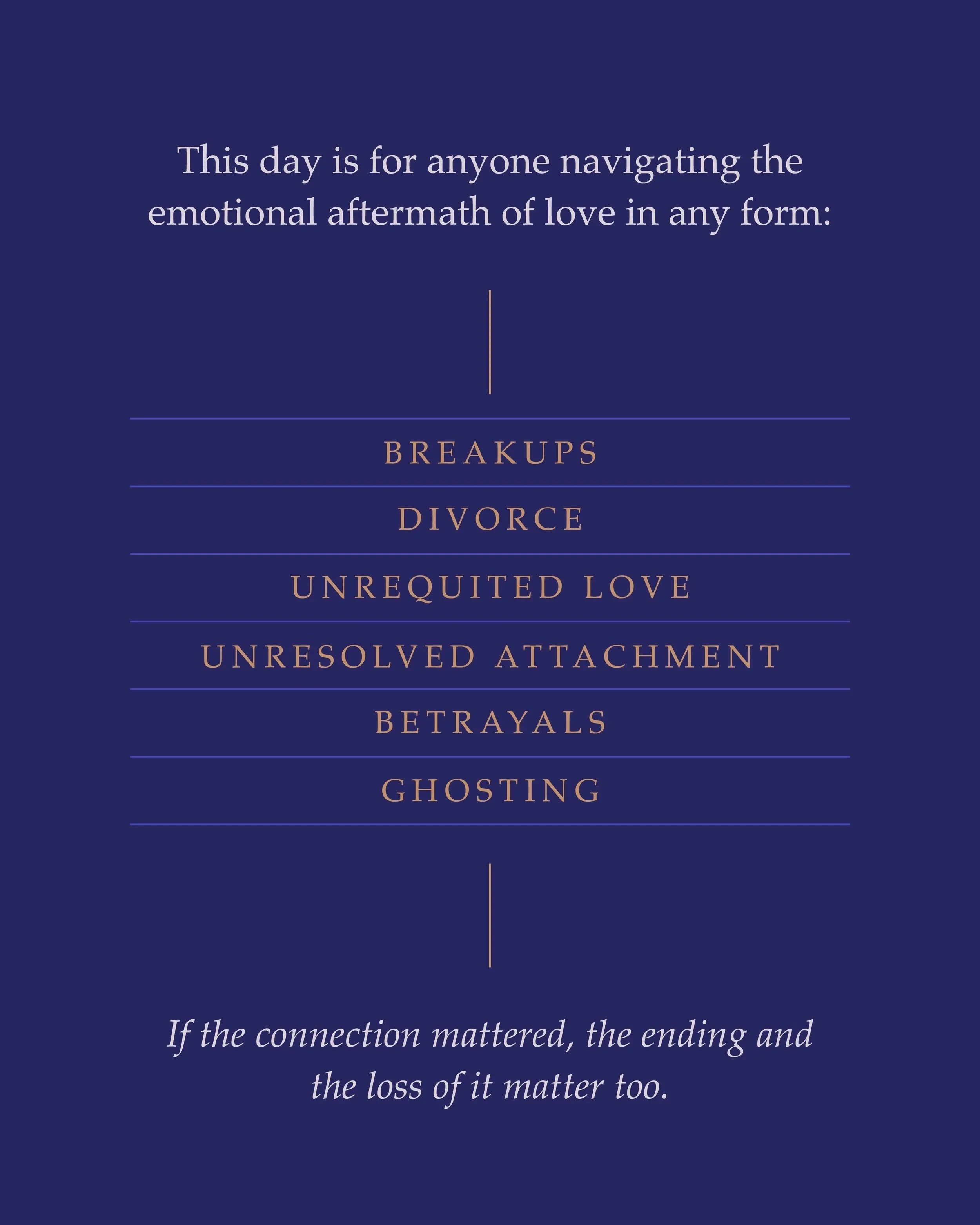
Romantic heartbreak is not limited to breakups, it can take many forms.
HRD is for anyone navigating romantic loss in any form, whether that loss is fresh or long unresolved. It includes people processing a recent breakup or divorce, those grieving a failed engagement, individuals recovering from betrayal, or anyone carrying lingering attachment to someone who is no longer present in their life. And romantic grief does not have a time limit, the length of a relationship does not determine the legitimacy of the pain.
It also includes people who feel destabilized by dating experiences—rejection, ghosting, or mismatched expectations.
Beyond those directly affected by heartbreak, HRD also serves supporters: friends, family, and community members who want to help others on their healing journey. To equip these supporters with practical tools, consider the language that can transform passive empathy into active support. For example, by asking thoughtful questions like 'Would talking help or should we go for a walk?' friends and family can offer a comforting presence.
Why I Created This Day

After more than a decade of working with clients to heal their hearts, I’ve watched clients transform not because heartbreak is inherently positive, but because it offers a unique opportunity.
Heartbreak exposes patterns—attachment dynamics, boundaries we ignored, conversations we avoided, emotional needs we downplayed.
This perspective is the foundation of my BetterBreakups Method™ and the reason HRD exists. The goal is not to romanticize pain or rush recovery. It’s to create a structured experience with reflection that interrupts impulsive behavior and supports emotional recalibration.
This initiative was born from the desire to share the message that heartbreak can be a powerful opportunity for transformation, but only if we engage it consciously.
How is HRD different from "Anti-Valentine's Day"?
While both HRD and Anti-Valentine's Day occur near Valentine’s Day, they serve different purposes.
Anti-Valentine's Day typically rejects or critiques the societal expectations and commercialization of romantic love, usually with an oppositional tone.
HRD does not reject love. It acknowledges that love sometimes ends, and that the ending deserves to be honoured. As such, HRD focuses on healing, self-love, and resilience. It acknowledges the pain of heartbreak, especially amidst all the Valentine’s Day festivities, offers support for recovery, and encourages individuals to use the day for reflection, healing, and personal growth.
A New Narrative for Heartbreak
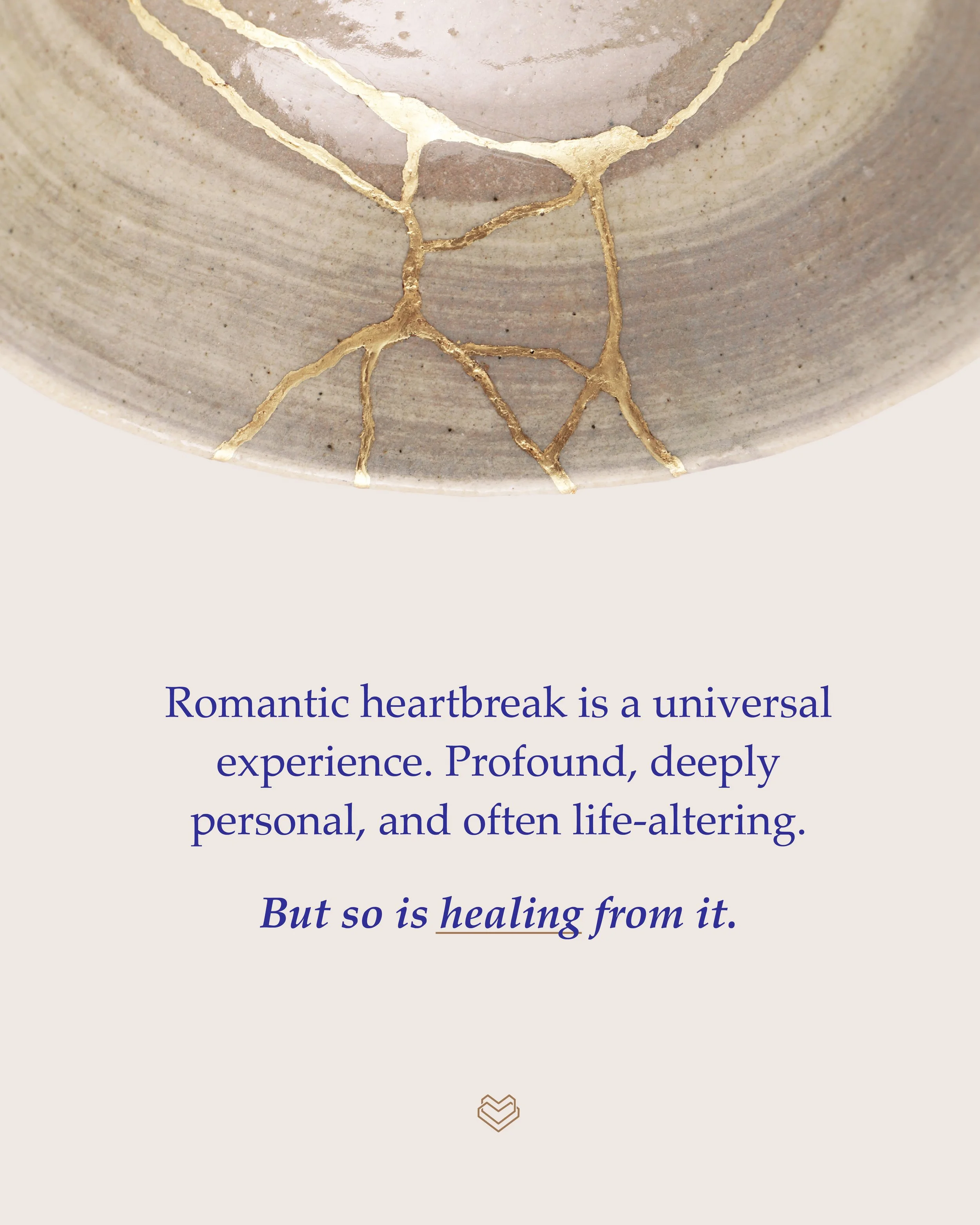
Heartbreak is a part of life, and it’s a part of our love stories. Without grief, there is no love.
International Heartbreak Recovery Day invites us to embrace our heartbreak as a natural, and essential part of our love stories. A shift from detail to acknowledgment, rumination to reflection, from emotional reactivity to intentional growth.
By coming together on International Heartbreak Recovery Day, we’re rewriting the story of heartbreak and creating a space for healing, growth, and empowerment.
This February 18th, let’s heal together.
How to Participate on February 18th
Anyone experiencing heartbreak or wishing to support others is welcome to participate in HRD.
Participation doesn’t require grand gestures, but rather intentional action.
Ways to Honour Your Heartbreak and Healing Journey
Reflective and emotional processing:
Write a letter from your future self to your current self, or a letter to your ex you don’t send.
Journal about what the relationship taught you. Ask yourself: What was this relationship preparing me for? Identify the needs you silenced or minimized.
Do something kind for your body, a body-based activity like yoga, dance, or stretching session
Spend time in nature to calm your nervous system.
Create a playlist that supports your emotional release.
Structure your healing:
Begin a psychology-based recovery plan.
Learn about attachment styles and emotional patterns.
Work with a therapist or coach.
Create a small personal ceremony:
Visit a meaningful place and say goodbye.
Light a candle to honour the relationship and its ending.
Establish a healthy boundary:
Mute or unfollow your ex on social media.
Remove reminders that keep you emotionally stuck.
Commit to stop checking their social media.
Commit to your growth:
Reconnect with parts of yourself you lost in the relationship.
Try something new that expands your identity.
Revisit goals that were put on hold.
Begin a new routine that supports stability.
Build a stronger relationship with yourself.
For community:
Reach out to a friend who feels safe.
Research and Join a healing or growth community.
Embrace self compassion:
Speak to yourself the way you would speak to a loved one.
Choose to forgive yourself for what you didn’t know.
Release shame about staying too long or loving deeply.
Acknowledge that grief is not weakness, and give yourself permission to move at your own pace.
Build your future intentionally:
Write a list of the qualities you want in your next relationship.
Visualize your life one year from now, and create a vision board for the next phase of your life.
Set one intention for the year ahead.
Other small but powerful ideas:
Take yourself on a solo date.
Buy yourself flowers.
Cook yourself a nourishing meal.
Clean or refresh your space.
Wear something symbolic of your new chapter.